Acne affects millions of people of all ages-from pesky pimples to full-on breakouts, it can seriously affect your complexion, and even your self-esteem. Most people attempt to get rid of it by experimenting with a variety of cleansers, lotions, and at-home remedies-which all fail to deliver consistent, long-lasting results. This is where the advent of the professional skincare treatment comes into play.
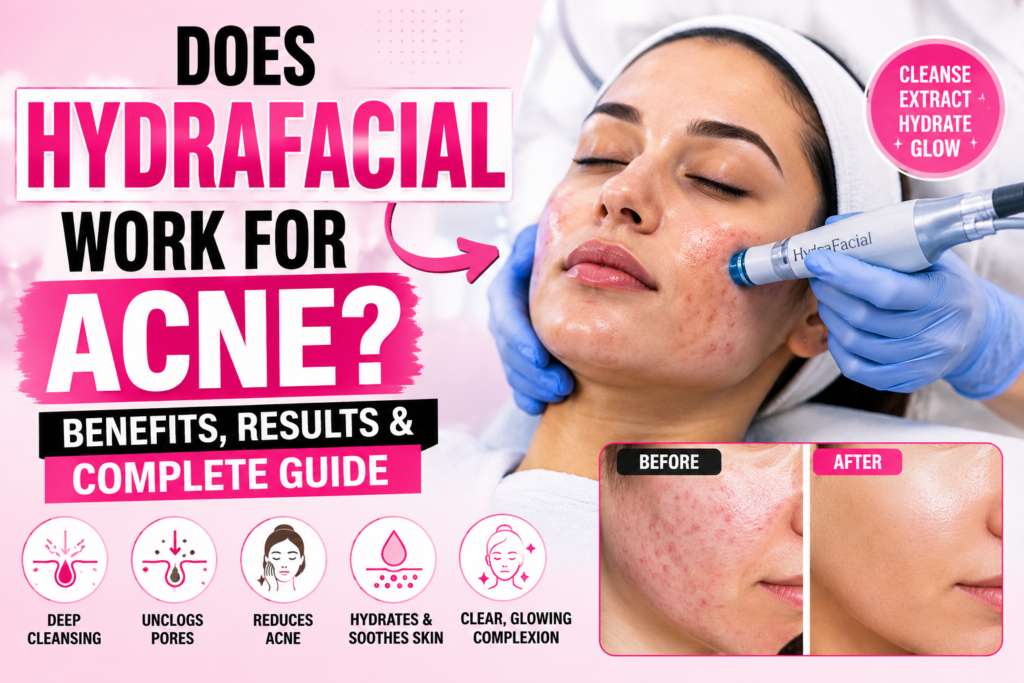
One of the leading forms of these treatments in recent years is the HydraFacial, which can thoroughly exfoliate, cleanse, hydrate, and extract your skin.
Many dermatologists offices and med-spas are beginning to offer it.
Table of Contents
Does HydraFacial work for acne?
Is a HydraFacial right for you? It can be yes-HydraFacial may be able to improve your acne-prone skin if you suffer from acne with clogged pores, oily skin, blackheads, whiteheads and mild to moderate acne. A HydraFacial can also work well to improve overall skin health and can work with you as part of your skin-care program.
This article will provide you with more details on how the treatment works, why you might find this effective for your skin concerns, who is eligible, and the potential outcomes of having a HydraFacial.
What Is a HydraFacial?
HydraFacial is a non-invasive skin care procedure involving a three-step cleansing and exfoliation, pore cleansing, and hydra-nourishing serums that provide deep skin cleaning, removal of dead skin cells and purification of pores.
A hydra facial will purify the skin of acne, dead skin, black and whiteheads, and clogged pores. It is not possible to receive this procedure without manual cleaning, however, it will remove your acne, and blackheads will remove white heads, and leave the skin feeling extremely clean and refreshed.
What Causes Acne?
The first step in knowing how a HydraFacial works to help with acne is to first understand how acne is formed. Acne occurs when the hair follicles in your skin become plugged by a combination of dead skin cells, excess sebum, and bacteria. When the pores become plugged, this inflammation will then take place and you get breakouts which can be blackheads, whiteheads, pimples or, in severe cases, cysts.
There are numerous causes for acne: hormonal changes, genetics, overactive oil glands, stress, various medications, your diet, and how you treat your skin at home.
It stands to reason that since acne has multiple causes, that it generally takes a combination approach to effectively treat it. HydraFacial does not treat the actual root cause of your acne, which might be hormones for example, but it can treat some of the skin factors that can cause your breakouts.
How Does HydraFacial Help Treat Acne?
Instead of just treating the breakout, HydraFacial is designed to enhance the overall state of acne-prone skin. It’s centered around maintaining clear pores, alleviating congestion, and delivering a surge of hydration back into the skin.
Step 1: Deep Cleansing In this first phase, impurities such as excess oil, debris, residual makeup, and grime are extracted from the surface of your skin. This is followed by a light exfoliation to slough away dull skin cells that are congesting your pores.
Step 2: Extractions The HydraFacial employs vacuum- suction technology for extraction rather than a sharp object. This helps to extract and pull out any existing whiteheads, blackheads and congestion in your pores. This procedure is less aggressive compared to traditional pore extractions and there is no manual squeezing involved.
Step 3: Rejuvenation With all congestion and debris extracted from the pores, specialized nutrient and antioxidant serums are then delivered into your skin. Well-hydrated skin is key to a strong barrier, and an overly-dry or irritated complexion may even prompt more oil production, making your skin breakout more often. Instead of harsh treatment to strip the skin of oil, HydraFacial enhances your skin health making it one of the best ways to get clearer, younger-looking skin.
How the HydraFacial Procedure Works
There is generally a process followed for the HydraFacial procedure and this process usually involves some key steps which help improve your skin’s health without any inconvenience in your procedure.
In the first step of the treatment, cleansing the face to make sure to take out makeup, sunscreen, accumulated grease, and even elements collected from the environment.
Following the step of skin resurfacing and dead skin extraction, to eradicate dead skin particles that get collected into pores and create acne.
In the next step, the machine executes extraction through very slight vacuum which is not at all painful and the process is designed to get rid of blackheads, whiteheads, and surplus sebum from the pores in a way which is generally more pain-free.
After proper skin clearing, there is a process for infusion in which the skin gets nourishing serum packed with moisture, peptides, antioxidants which provide and preserve your fresh and young-looking skin.
This procedure generally lasts around 30–45 mins, and the clients can generally proceed to resume their daily routines after treatment.
HydraFacial vs Regular Facial for Acne
| Feature | HydraFacial | Traditional Facial |
|---|---|---|
| Cleansing | Deep cleansing with advanced technology | Manual cleansing |
| Exfoliation | Gentle and controlled | Depends on products used |
| Extraction | Vacuum-assisted extraction | Manual extraction |
| Hydration | Intensive serum infusion | Basic moisturization |
| Downtime | Minimal | Usually minimal |
| Suitable for Acne-Prone Skin | Often suitable with professional assessment | Varies depending on the facial technique |
| Skin Feel After Treatment | Smooth, hydrated, refreshed | May vary based on treatment |
Benefits of HydraFacial for Acne-Prone Skin
Acne, oily skin treatment benefits HydraFacial: Potential skin-friendly treatment If you’re suffering from acne and have oily skin, you can potentially enjoy a few of the benefits of HydraFacial. Since the HydraFacial procedure addresses both cleansing, exfoliation, extraction, and hydrating of the skin, you can help improve skin without the skin overreacting. One of the biggest things you’ll immediately notice is clearer skin.
The removal of excess oil and dead skin will minimize pore congestion.
Some of our clients experience smoother skin after continued treatments. Minimize large pore size You will experience less debris when your pores aren’t constantly plugged up. This may minimize the occurrence of blackheads and whiteheads with routine treatment. Improve hydration You’ve probably already know this, but oily skin still needs some moisture.
Hydrated skin can help protect its skin barrier, possibly reducing the cycle that causes excessive oily skin production.
Non-invasive treatment Unlike a traditional peel or other skin treatment that can cause irritation, many of our clients love the fact that they can go right back to work or a night out immediately following their procedure.
Is HydraFacial Suitable for Every Type of Acne?
While there are a number of people who can benefit from a HydraFacial on acne-prone skin, the procedure is not suitable for all acne concerns.
People who suffer from blackheads, whiteheads, mild to moderate acne, excess sebum, and enlarged pores will typically see great results from HydraFacial procedures carried out by skin professionals. However, those who suffer from the most aggressive types of acne – such as cystic acne, open sores, painful lesions or skin infections – might need a course of alternative treatment before embarking on HydraFacial therapy.
It goes without saying that every individual’s skin is different and the best solution for acne is a consultation with an aesthetic practitioner. Your practitioner will be able to assess your specific skin type and will guide you to decide if HydraFacial will be suitable.
Can HydraFacial Reduce Acne Breakouts?
While there are a number of people who can benefit from a HydraFacial on acne-prone skin, the procedure is not suitable for all acne concerns.
People who suffer from blackheads, whiteheads, mild to moderate acne, excess sebum, and enlarged pores will typically see great results from HydraFacial procedures carried out by skin professionals. However, those who suffer from the most aggressive types of acne – such as cystic acne, open sores, painful lesions or skin infections – might need a course of alternative treatment before embarking on HydraFacial therapy.
It goes without saying that every individual’s skin is different and the best solution for acne is a consultation with an aesthetic practitioner. Your practitioner will be able to assess your specific skin type and will guide you to decide if HydraFacial will be suitable.
Does HydraFacial Help with Acne Marks?
Probably one of the most vexing things about acne are those marks left behind after your breakouts are gone. Post-acne marks can create a generally dull and uneven look to your complexion, even if your breakouts have cleared up. Hydrafacial lightly removes the outermost skin layer and can promote healthier skin cell turnover which can assist in diminishing minor shallow marks from acne and uneven complexion.
Note that deep, permanent scars from acne often require other procedures like microneedling, chemical peels, fractional laser resurfacing, or other combination treatments.
HydraFacial works great to support a healthy, glowing complexion and improve slight discoloration, but doesn’t help significantly with deep scarring.
Who Is an Ideal Candidate for HydraFacial?
Since HydraFacial is mild and can be personalized, many people are a good fit for this facial. Those with the following skin concerns typically have the best results:
Oily skin Larger pore sizes Blemishes, including blackheads and whiteheads Fine lines and wrinkles Uneven skin texture Dehydration Dull skin Mild acne Some may also turn to the HydraFacial facial to get ready for a wedding, business event, photoshoot or other big occasion as this facial has little downtime but can achieve noticeable results. If you’re searching for a healthy and clean skin complexion and you currently keep a professional skin routine in order, HydraFacial treatments are likely beneficial for you.
Who Should Avoid HydraFacial?
Although HydraFacial is considered safe for many individuals, it may not be appropriate for everyone.
People with active skin infections, open wounds, severe cystic acne, severe sunburn, or certain inflammatory skin conditions should postpone treatment until their skin has healed. Those with known allergies to skincare ingredients should also discuss their medical history with their provider before treatment.
A professional consultation is essential because an experienced skincare specialist can evaluate your skin and determine whether HydraFacial is suitable for your current condition.
How Many HydraFacial Sessions Are Needed for Acne?
You are probably wondering just how many treatment sessions can be expected. Because of all of the different kinds of people on the earth, you and I are sure that it would be difficult to find anyone who actually knows how their particular skin will react.
The truth is you may experience and will likely notice a reduction of breakouts, a decrease in dull skin and an increase in radiant skin after just one facial session, although more severe types of acne or oily skin, are more effectively treated over a course of the recommended treatment sessions in conjunction with an established skin care routine at home.
A provider may administer treatments on an on a regular schedule, as he or she thinks necessary depending on a certain skin type, specific needs of the client and in accordanceance with the overall skin care plan.
How Long Do HydraFacial Results Last?
Most individuals see immediate results in skin softness and moisture after a single treatment.
Since your skin naturally secretes oil and is constantly bombarded with pollution, makeup, and environmental aggressors, these improvements aren’t lasting.
In general, clear, radiant skin depends on a healthy mix of a balanced skincare routine, an adequate SPF, appropriate cleansing, proper moisturizing and products that your skin’s specific type can benefit from, alongside professional skin treatments. ProfessionalHydraFacial treatments are essential to preserving clear and healthy-looking skin for an extended period of time.
Possible Side Effects of HydraFacial
HydraFacial should be safe for any skin type when performed by a skilled aesthetician or technician. “People will see mild redness, but it resolves quickly,” notes Marla Di Gregorio. “It is not that people can’t handle the pressure but rather that the process is essentially vacuuming out impurities, so sensitive skin is prone to temporarily react with redness.
Fortunately, this tends to clear up fairly quickly.”
Although not extensive, patients should be aware of possible temporary skin sensitivity. “For the most part, people come back for a midday lunch. “Afterward, it’s important to avoid exfoliation or any additional skin resurfacing for at least a few days and continue to follow the esthetician’s aftercare advice to aid recovery and prevent prolonged sensitivity.”
Aftercare Tips Following HydraFacial
Taking care of your skin after treatment ensures the best results and offers protection for your skin for the first few days after your procedure. A post-HydraFacial face can be slightly more susceptible to environmental factors and skincare. This can make your skin more responsive to moisturizers, cleansers, and sunscreen – all key components to everyday skincare.
Post-treatment, you should stay away from harsh exfoliators, potent actives, steam rooms or saunas, and prolonged exposure to sunlight.
You should give your skin a few days to recover from the treatment to allow the effective nutrients to penetrate. Keeping your skin well hydrated both from the inside out (drinking plenty of water) and by applying a suitable hydrating moisturiser and using a broad-spectrum daily sunscreen can also help prolong the refreshing and rejuvenated effects of your HydraFacial.
HydraFacial Compared with Other Acne Treatments
HydraFacial is one of many professional treatments available for acne-prone skin. Depending on your concerns, your provider may recommend combining it with other procedures or selecting an alternative treatment.
| Treatment | Best For | Downtime |
|---|---|---|
| HydraFacial | Oily skin, clogged pores, blackheads, mild acne | Minimal |
| Chemical Peel | Pigmentation, acne marks, uneven skin tone | Mild to Moderate |
| Microneedling | Acne scars, skin texture | Moderate |
| Fractional CO2 Laser | Deep acne scars, wrinkles, skin resurfacing | Moderate to Higher |
| Medical Acne Treatments | Moderate to severe acne | Depends on treatment plan |
The most suitable treatment depends on your skin condition, medical history, and long-term skincare goals. In many cases, combining professional treatments with dermatologist-recommended skincare products provides the best overall results.
FAQ
Why should I choose Aesthetics Mirror Glam Studio for HydraFacial treatment?
At Aesthetics Mirror Glam Studio, every HydraFacial treatment begins with a detailed skin analysis to understand your skin type and concerns. Our experienced professionals use advanced HydraFacial technology, high-quality skincare products, and personalized treatment plans to help improve acne, oily skin, clogged pores, pigmentation, and overall skin health while maintaining the highest standards of hygiene and client care.
How can I book a HydraFacial appointment at Aesthetics Mirror Glam Studio?
Booking your HydraFacial appointment is simple. You can call or WhatsApp us at 9266233677 to schedule a skin consultation. Our experts will assess your skin condition, answer your questions, and recommend the most suitable treatment plan to help you achieve healthy, glowing, and refreshed skin.