Chemical Peel vs HydraFacial: What Is the Difference and When Is Each Used?
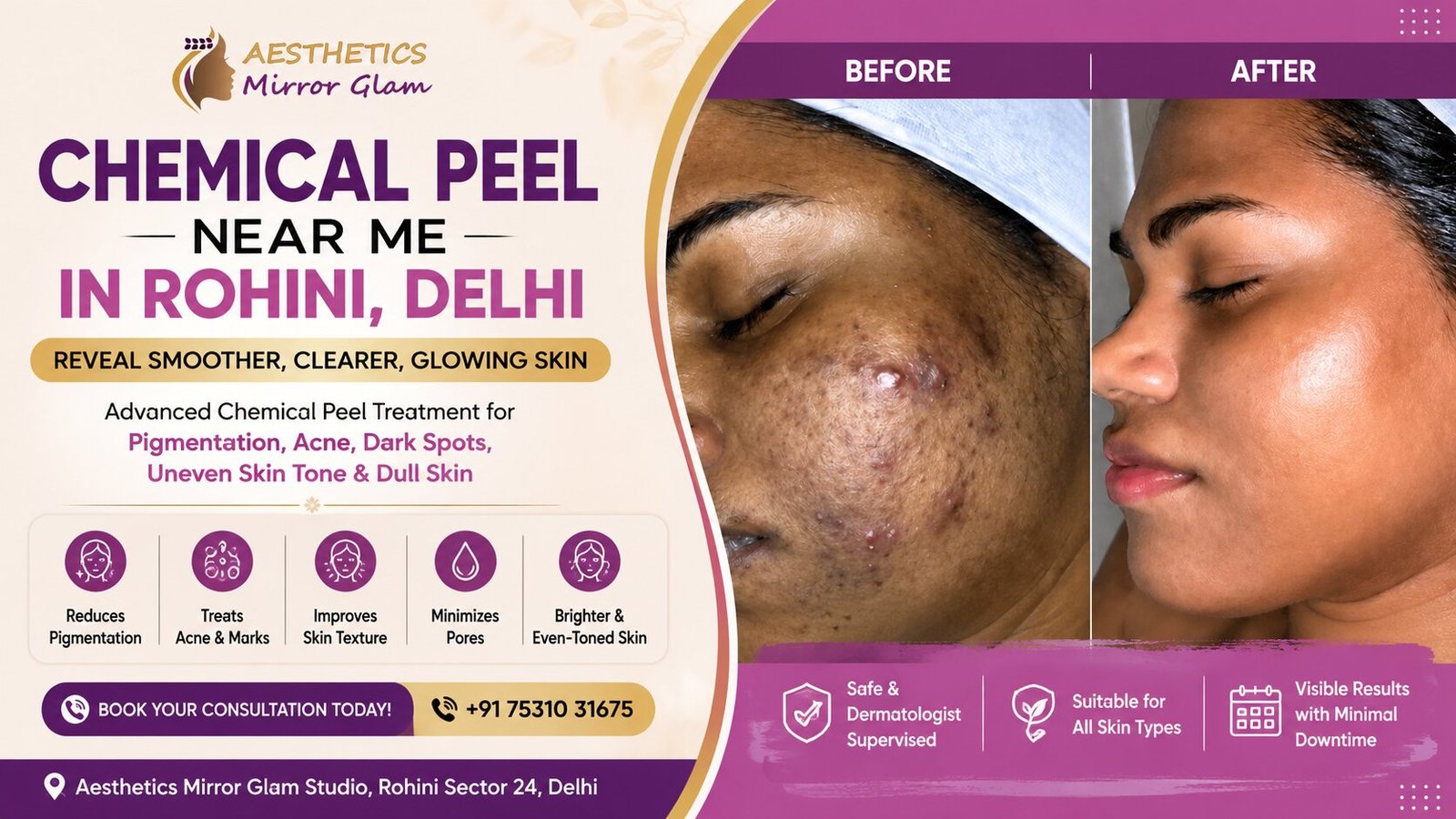 Chemical Exfoliation
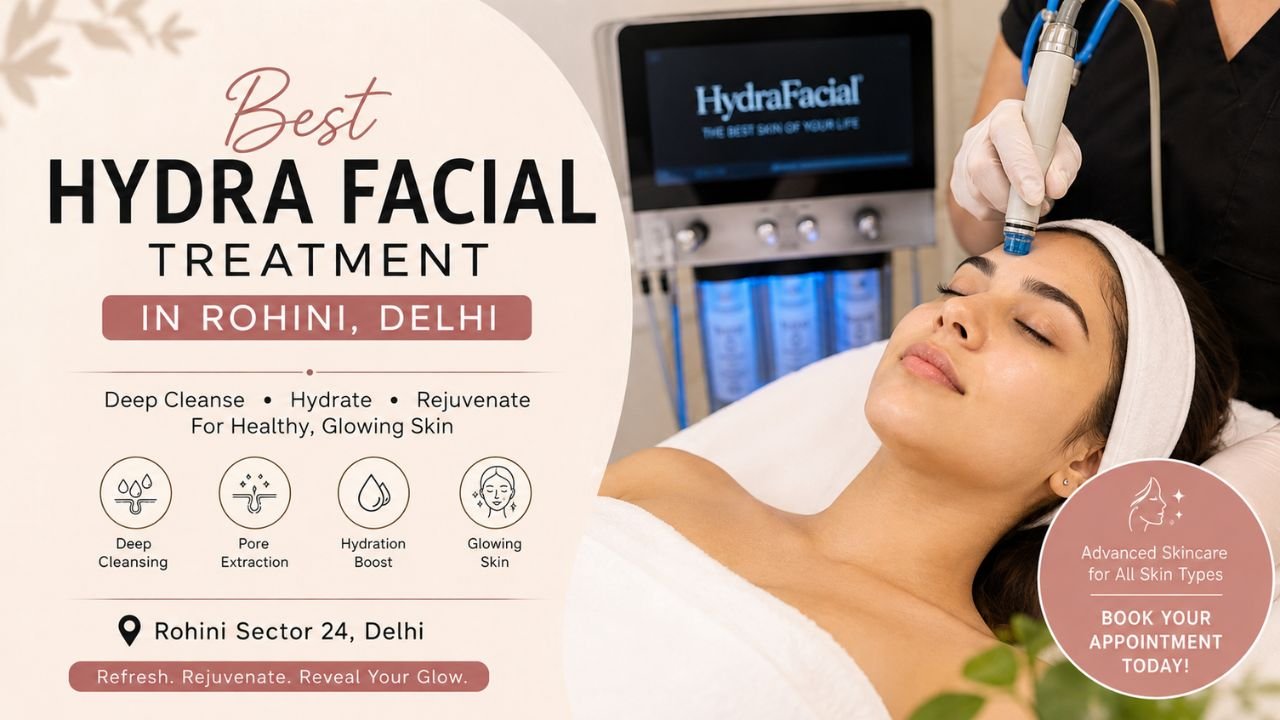 Vortex Infusion
Quick Verdict: The Core Difference
The primary difference between a Chemical Peel and a HydraFacial lies in their mode of action: A Chemical Peel uses specialized acid solutions (AHA/BHA/TCA) to deliberately dissolve dead cell bonds and shed the damaged outer layer of skin over 3–7 days for deep pigment correction. In contrast, a HydraFacial is a gentle, machine-powered vortex treatment that exfoliates, suctions blackheads, and simultaneously infuses hydrating serums in one session with zero downtime and instant radiance.
1. What Is a Chemical Peel and How Does It Work?
A Chemical Peel is a medically formulated dermatological resurfacing treatment. An aesthetician or cosmetologist applies a controlled clinical acid blend (such as Glycolic, Salicylic, Lactic, Mandelic, or Trichloroacetic Acid) to break the protein bonds that hold dead, damaged, and hyperpigmented cells together on the stratum corneum.
Once these bonds are dissolved, the outer layer gradually peels away over a period of 3 to 7 days, prompting the dermis to produce fresh, blemish-free skin cells rich in elastin and collagen.
Common Types of Peels
- Salicylic Acid (BHA): Oil-soluble acid that penetrates deep into sebaceous glands to clear active cystic acne & comedones.
- Glycolic & Lactic (AHA): Water-soluble fruit acids targeting sun damage, tanning, and fine surface lines.
- Yellow / Retinol Peel: High-potency rejuvenating peel for stubborn melasma and post-inflammatory hyperpigmentation (PIH).
Key Benefits
- Lightens stubborn melasma and chronic dark patches.
- Smooths rough textural irregularities and shallow acne scarring.
- Controls recurring oiliness and reduces pore congestion.
- Long-lasting structural skin transformation over a series of sessions.
2. What Is a HydraFacial and How Does It Work?
A HydraFacial is a patented, multi-step medical-grade hydradermabrasion system. Instead of relying purely on chemical shedding or aggressive manual extractions, it utilizes a spiral Vortex-Fusion suction handpiece that simultaneously cleanses, exfoliates, extracts debris, and saturates the skin with nutrient-rich serums.
The treatment works in 4 harmonious phases:
- Cleanse & Peel: Gentle physical exfoliation combined with mild glucosamine to unglue surface buildup.
- Extract & Hydrate: Painless vortex vacuum suction that empties blackheads, whiteheads, and sebum from congested pores while delivering quenching botanical moisturizers.
- Fuse & Protect: Targeted saturation of hyaluronic acid, peptides, and antioxidant cocktails into freshly cleared follicles.
- LED Light Therapy: Blue light to kill P. acnes bacteria or Red light to soothe and stimulate cellular collagen synthesis.
3. Side-by-Side Comparison: Chemical Peel vs HydraFacial
Evaluating both procedures against key clinical parameters helps determine the right protocol for your exact skin goals, pain tolerance, and event timeline:
| Parameters | Chemical Peel | HydraFacial |
|---|---|---|
| Primary Mechanism |
Acid Dissolution Chemical breakdown of cellular glue (desmosomes) followed by skin flaking. |
Vortex Infusion Vacuum extraction + continuous serum micro-channel infusion. |
| Downtime & Peeling | 3 to 7 Days of redness, micro-crusting, and noticeable dead skin flaking. | Zero Downtime. Immediate glowing complexion, walk out event-ready. |
| Pain / Sensation | Mild to moderate warmth, tingling, and slight stinging during active acid application. | Completely painless; feels like a cool, gentle paintbrush massage. |
| Best For | Stubborn melasma, sun spots, active cystic acne, and textured acne scars. | Dullness, dehydrated skin, blackheads, enlarged pores, and pre-wedding glow. |
| Time to See Results | 7 to 14 days (after shedding completes and fresh epidermis forms). | Instantaneous (visible glassy dewiness immediately after 45-min treatment). |
| Recommended Frequency | Every 3 to 4 weeks (course of 3 to 6 sessions). | Every 4 weeks for long-term skin health maintenance. |
4. When Is Each Treatment Used? (Clinical Decision Guide)
At Aesthetics Mirror Glam Studio in Rohini, we analyze your skin barrier integrity, hydration levels, and upcoming schedule before recommending a treatment:
Choose Chemical Peel If:
- You struggle with deep epidermal or dermal pigmentation, freckles, or hormonal melasma.
- You have persistent acne blemishes and dark post-acne marks (PIH) that topical creams fail to lighten.
- You have at least 1 to 2 weeks before any major social event to allow for safe exfoliation.
- Your primary goal is structural skin resurfacing rather than temporary hydration.
- You can strictly follow post-peel sun protection and barrier repair routines.
Choose HydraFacial If:
- You have a wedding, party, or photo shoot within 24 to 48 hours and need glass skin with zero redness.
- Your skin feels chronically dry, dull, tight, or fatigued from Delhi pollution and hard water.
- You suffer from stubborn blackheads, whiteheads, and congested T-zone pores.
- You have sensitive or reactive skin that easily inflames with strong cosmetic acids.
- You want an enjoyable, zero-pain medical facial that cleanses and plumps simultaneously.
The 4-Week “Hydro-Peel” Synergy Protocol
Can’t decide between the two? For clients dealing with both chronic pigmentation and deep pore congestion, our master cosmetologists at Aesthetics Mirror Glam recommend an alternating Synergy Protocol:
Week 1: HydraFacial Prep
Vortex extraction clears sebum plugs and deeply hydrates the skin barrier, creating an even canvas for acids.
Week 3: Targeted Peel
Targeted AHA/BHA chemical peel penetrates cleanly without oil-barrier blockage to dissolve deep pigment deposits.
Week 5+: Glass Glow Lock
A gentle maintenance HydraFacial restores moisture reserves and locks in long-lasting, radiant luminosity.
6. Frequently Asked Questions (FAQs)
Ready to Reveal Your Flawless, Radiant Skin?
Still unsure whether your skin needs deep acid exfoliation or intense vortex hydration? Visit Aesthetics Mirror Glam Studio for a personalized digital skin assessment and customized treatment plan with Jyoti Kashyap.
Chemical Peel vs HydraFacial: What Is the Difference and When Is Each Used?
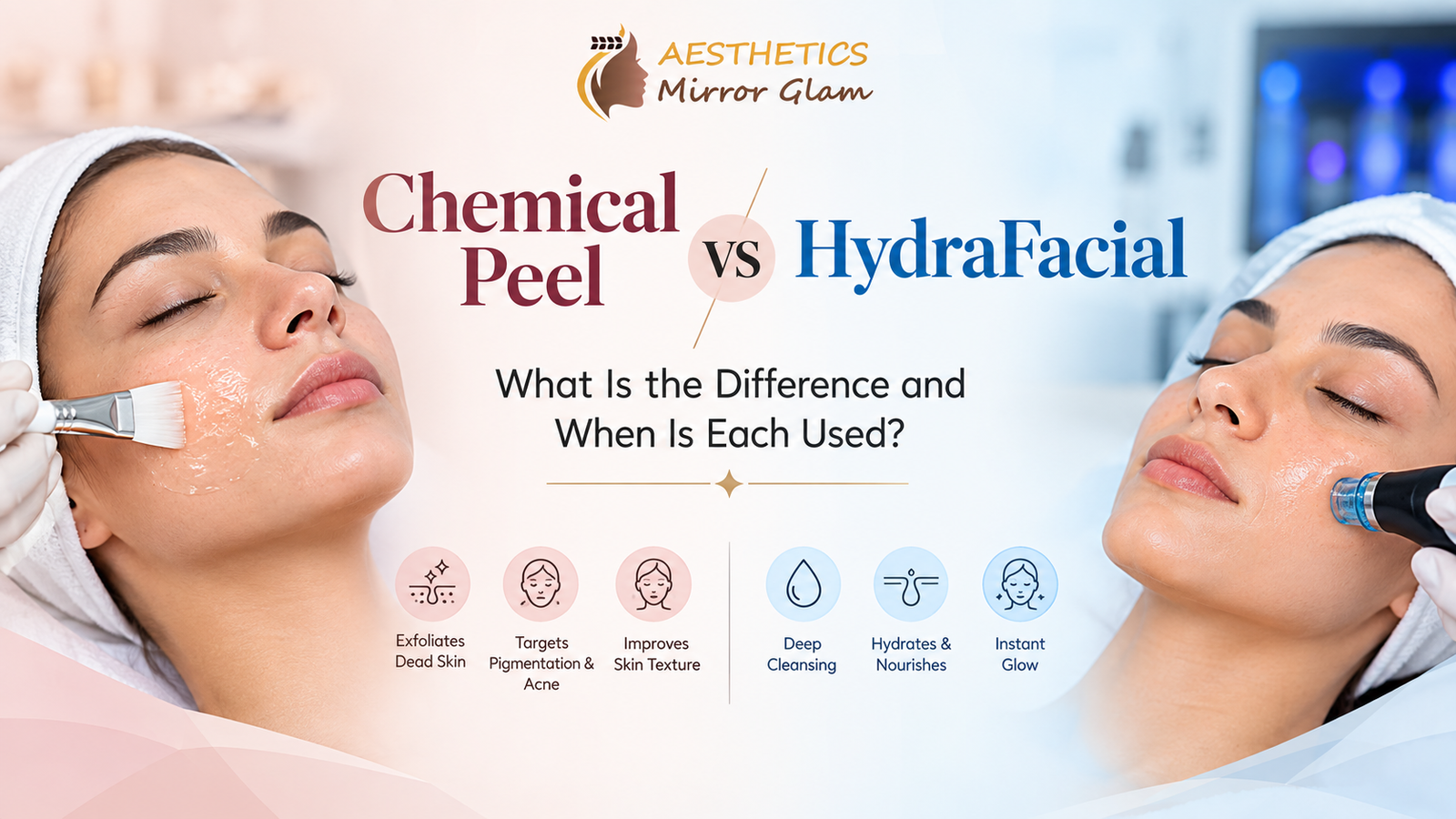
When your skin looks dull, uneven, congested, or tired, you’ll probably come across 2 popular treatments: chemical peel and HydraFacial.
Both are used in professional skincare, but they work in different ways.
A chemical peel uses a carefully selected chemical solution to exfoliate the skin. A HydraFacial uses a device to cleanse, exfoliate, extract impurities, and deliver hydrating skincare ingredients to the skin.
So, which one should you choose?
That depends on your skin concern, skin sensitivity, current condition, and the result you’re trying to achieve.
What is a chemical peel?
A chemical peel is a professional skin treatment that uses a chemical solution to remove damaged surface skin cells.
Different peels contain different ingredients and strengths. Some commonly used peel ingredients include glycolic acid, salicylic acid, lactic acid, and other acids selected according to the client’s skin needs.
The treatment can be used for concerns such as:
- Acne and clogged pores
- Post-acne marks
- Uneven skin tone
- Pigmentation
- Tanning
- Rough skin texture
- Dull-looking skin
- Fine lines
The type of peel matters.
For example, salicylic acid is commonly used for oily and acne-prone skin, while glycolic acid is often used for exfoliation, dullness, and uneven texture.
A professional should assess your skin before choosing the peel and concentration.
What is a HydraFacial?
A HydraFacial is a device-based facial treatment that combines cleansing, exfoliation, extraction, and hydration in a single session.
The skin is first cleansed and exfoliated to remove surface buildup. A suction-based extraction step can then help remove impurities from pores.
The treatment is followed by hydration and skincare products selected according to the skin’s needs.
People commonly consider HydraFacial when their skin feels:
- Dry or dehydrated
- Dull
- Rough
- Congested
- Oily
- Tired-looking
One reason people like HydraFacial is the fresh, clean feeling after the treatment.
There is usually little interruption to your normal routine, although your skin can still react differently depending on the products and steps used during the session.
Chemical peel vs HydraFacial: the basic difference
The easiest way to understand the difference is to look at what each treatment is designed to do.
A chemical peel focuses on controlled exfoliation using a chemical solution.
A HydraFacial combines exfoliation with cleansing, extraction, and hydration using a device.
Here’s a simple comparison:
| Chemical Peel | HydraFacial |
|---|---|
| Uses a chemical exfoliating solution | Uses a professional facial device |
| Mainly focuses on exfoliation | Combines cleansing, exfoliation, extraction and hydration |
| Different acids can target different concerns | Different steps and serums can be selected for skin needs |
| Can be used for acne, marks, pigmentation and texture | Commonly used for dullness, dehydration and congestion |
| Peel strength depends on the formulation | Treatment intensity depends on the device settings and protocol |
| Some peels can cause temporary redness or peeling | Usually has little downtime, though reactions can vary |
Your skin condition should decide the treatment rather than the name of the treatment.
When is a chemical peel used?
A chemical peel can make sense when your main concern involves surface skin buildup, acne, pigmentation, marks, or uneven texture.
For example, someone with frequent clogged pores and oily skin may be assessed for a peel containing salicylic acid.
Someone dealing with dull skin and uneven texture may be considered for a glycolic acid-based peel, depending on their skin condition.
Chemical peels are also used for post-acne pigmentation and tanning.
But the peel has to match the skin.
Using a stronger peel doesn’t automatically mean you’ll get a better result. The wrong strength or product can irritate the skin, especially when the skin barrier is already sensitive.
When is HydraFacial used?
HydraFacial is commonly chosen by people who want their skin to feel cleaner, smoother, hydrated, and refreshed.
It’s particularly popular before events because there is generally little downtime compared with treatments that cause more visible peeling.
For example, if your skin feels dry after spending time in air conditioning, looks tired after a busy week, or feels congested around the nose and forehead, a HydraFacial may be considered.
The extraction step can help with pore congestion, while the hydration step leaves the skin feeling more moisturised.
Still, HydraFacial isn’t a treatment for every skin problem.
If your main concern is persistent pigmentation or significant acne-related marks, your skincare professional may recommend a different treatment plan.
Which is better for acne?
This depends on the type of acne and the condition of your skin.
For oily, congested, acne-prone skin, certain chemical peels for acne can be useful because ingredients such as salicylic acid help exfoliate the skin and can work with oil and pore congestion.
HydraFacial can also be useful when the concern is mild congestion and surface buildup.
Active, inflamed acne needs more care.
If you have painful, widespread, or inflamed acne, getting a treatment without proper skin assessment isn’t a good idea. A professional can check your skin and decide whether a facial, peel, or medical acne treatment is more appropriate.
Which is better for pigmentation?
Pigmentation can have many causes, including sun exposure, acne marks, hormonal changes, and skin irritation.
Some chemical peels for pigmentation can help improve the appearance of uneven tone by removing damaged surface cells and encouraging fresh skin turnover.
HydraFacial can improve the appearance of dull and uneven-looking skin through exfoliation and hydration, but it isn’t automatically the right treatment for every type of pigmentation.
If pigmentation keeps returning, the cause needs to be considered.
And sunscreen matters.
You can spend money on professional treatments, but regular sun protection still plays a major role in managing pigmentation.
Which treatment is better for dry skin?
If your main concern is dehydration, HydraFacial is often considered because hydration is a major part of the treatment.
Dry skin can feel tight, rough, or uncomfortable. Sometimes the skin can also look dull because of surface buildup.
A HydraFacial combines exfoliation with hydration, which can leave the skin feeling softer and more comfortable after the session.
Chemical peels can also be used on some dry or dull skin types, but the type of peel and concentration need to be selected carefully.
If your skin barrier is irritated, a peel may need to be postponed until your skin settles.
What about oily and congested skin?
Oily skin can collect excess sebum and dead skin cells, especially around the nose, forehead, and chin.
That’s where professional exfoliation and extraction can be useful.
A HydraFacial can help with surface buildup and pore congestion through its cleansing and extraction steps.
Certain chemical peels can also be used for oily and acne-prone skin.
The better choice depends on what is causing the congestion and how sensitive your skin is.
Sometimes the issue isn’t simply “oily skin.” You might also have dehydration, irritation, or an impaired skin barrier.
Is there downtime after a chemical peel?
Downtime depends on the type and strength of the peel.
Some superficial chemical peels cause little visible peeling. Others can cause redness, dryness, tightness, or noticeable peeling for several days.
Your skin can also feel sensitive after treatment.
That’s why aftercare matters.
Your skincare professional may recommend avoiding certain active ingredients for a period of time and using gentle skincare and sun protection.
Don’t pick or pull peeling skin. Let it shed naturally.
Is there downtime after HydraFacial?
HydraFacial is generally known for having minimal downtime.
Your skin may look slightly pink immediately after treatment, especially if your skin is sensitive or the extraction process was intensive.
Many people return to their normal routine soon after the session.
Still, everyone’s skin reacts differently.
If you’re using prescription skincare, have very sensitive skin, active irritation, or another skin condition, tell your professional before treatment.
Can you get a chemical peel and HydraFacial together?
Sometimes skincare professionals use different treatments at different points in a skincare plan.
But combining treatments isn’t automatically suitable for everyone.
Your skin needs time to recover from exfoliation. Doing too many exfoliating treatments close together can cause irritation, dryness, or sensitivity.
So don’t plan treatments based only on what sounds more powerful.
A professional skin assessment should come first.
How do you choose between chemical peel and HydraFacial?
Start with your main concern.
If you’re mainly dealing with acne, post-acne marks, pigmentation, tanning, or uneven texture, a chemical peel may be considered after a skin assessment.
If your skin feels dehydrated, dull, congested, or rough, HydraFacial may be a suitable option.
And if you’re unsure, don’t guess.
A skincare professional can look at your skin, ask about your routine, check your sensitivity, and then suggest the treatment that fits your current skin condition.
That’s especially useful if you’re already using retinol, acids, acne medication, or prescription skincare.
Chemical peel or HydraFacial before an event?
This is a common question.
If you have a wedding, party, photoshoot, or another important event coming up, treatment timing matters.
A HydraFacial is often considered closer to an event because it generally has little downtime.
Chemical peel timing depends on the peel. Some peels can cause visible dryness or peeling, so getting one immediately before an event may not be suitable.
Give your skin enough time to settle.
Your skincare professional can help you plan the treatment based on your skin and the type of peel being considered.
Chemical Peel vs HydraFacial: which one should you choose?
There isn’t one treatment that works the same way for every person.
Chemical peels are mainly used for controlled exfoliation and can be selected for concerns such as acne, pigmentation, marks, tanning, and uneven texture.
HydraFacial combines cleansing, exfoliation, extraction, and hydration and is commonly chosen for dull, dehydrated, rough, or congested skin.
Your skin concern should guide the decision.
If you’re in Delhi and looking for a chemical peel or HydraFacial, get your skin assessed before choosing a treatment. A proper consultation can help determine what your skin actually needs instead of simply following a trending facial treatment.
And remember, good skincare isn’t about doing the maximum number of treatments.
It’s about choosing the right treatment for your skin and giving it enough time to recover.